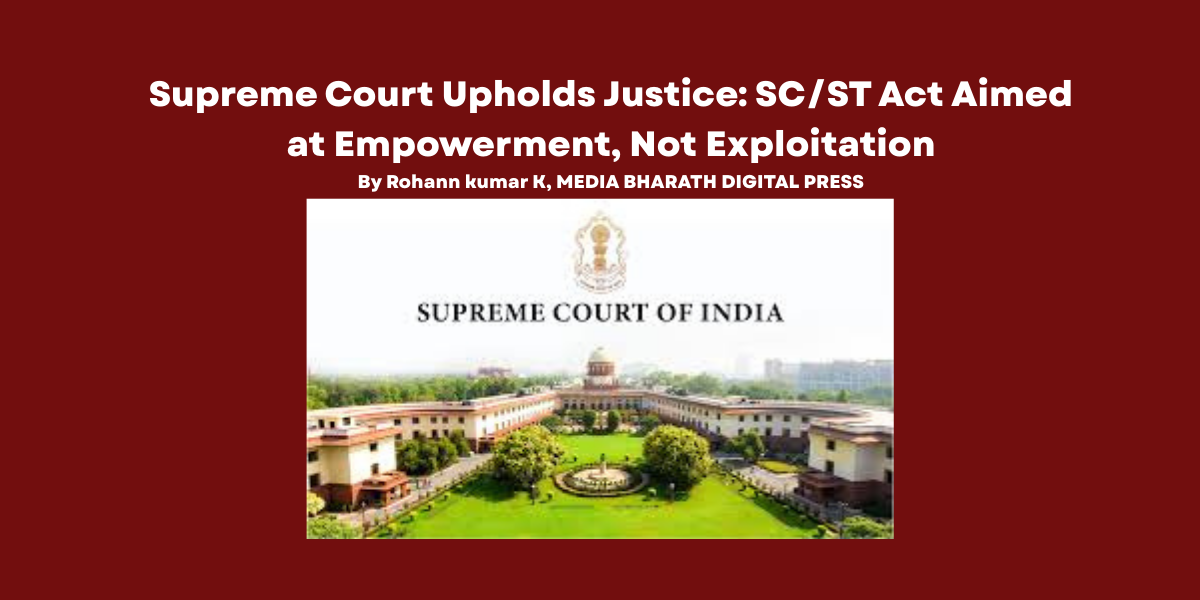
By Rohann kumar K, MEDIA BHARATH DIGITAL PRESS
NEW DELHI – In a monumental decision for the Indian judicial system, the Supreme Court has delivered a landmark judgment that clarifies the scope of the Scheduled Castes and the Scheduled Tribes (Prevention of Atrocities) Act, 1989. This ruling provides significant relief to citizens who have been subjected to the distress of false or misleading cases, reinforcing that the law is a tool for social equality, not a weapon for personal vendettas.
The Court’s ruling on January 12, 2026, emphasizes that the core intent of the Act is to empower marginalized communities and bring about positive social change, rather than being a mechanism for arbitrary punishment in routine personal disputes.
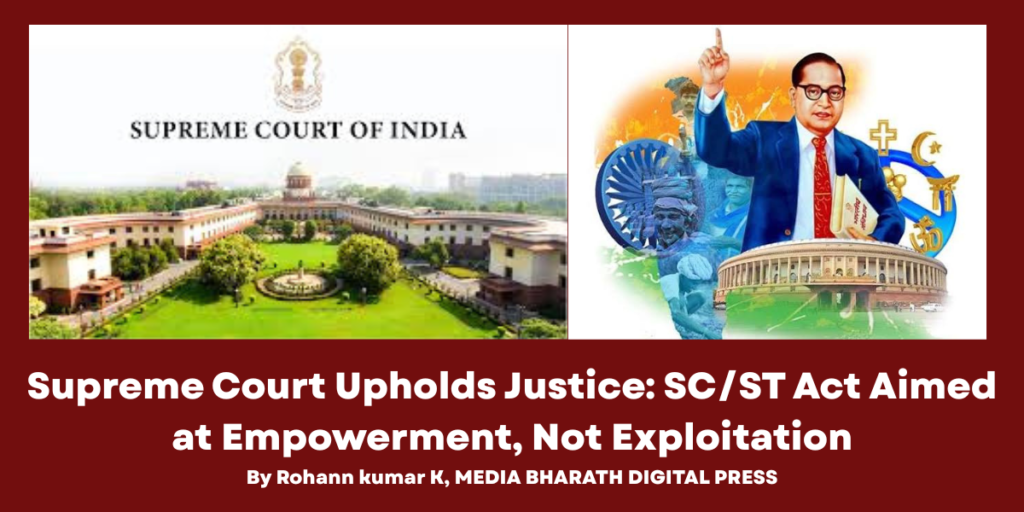
The Ruling: Intent is the “Sine Qua Non”
A bench comprising Justices J.B. Pardiwala and Alok Aradhe quashed the criminal proceedings against Keshav Mahato (also known as Keshaw Kumar Mahto) from Bihar. Mahato had been accused of using abusive language at a Bhagalpur Anganwadi centre in 2019.
The Court observed that while the complainant belonged to a Scheduled Caste, the FIR and chargesheet lacked any specific allegation that the abuse was directed at the person’s caste identity. By setting aside the Patna High Court’s February 2025 refusal to intervene, the Supreme Court sent a clear message: abuse alone does not constitute an atrocity under the Act without proven caste-based intent.
Strict Conditions to Prevent Misuse
To ensure that the Act is not exploited, the Court outlined two mandatory prerequisites for an offence under Section 3(1)(r):
- Identity: The victim must belong to an SC/ST community.
- Caste-Based Intent: The insult or intimidation must be intentionally targeted at the victim’s caste identity and must occur in public view.
The Court warned that allowing trials to proceed without these essential ingredients amounts to a “travesty of justice.” It has urged investigating officers and lower courts to rigorously scrutinize claims to protect innocent citizens from being misled or tortured by false litigation.
A Vision for Equality, Not Vengeance
The judgment serves as a powerful reminder of the Act’s true purpose. The Supreme Court stated that the law was created to bring change and uphold the dignity of marginalized citizens. Using it to settle personal scores undermines the very struggle for equality that the Act represents.
“The SC/ST Act is a shield to protect the vulnerable from historical oppression; it must not be turned into a sword to settle private grudges. Empowerment prevails only when justice is evidence-based.”
Big Relief for Society
This decision is being hailed as a major victory for common people who have lived in fear of the “misuse” of the Atrocities Act. It provides a clear legal framework that protects the rights of every citizen:
- Protects the Innocent: Ensures people are not punished for general verbal spats that have no relation to caste.
- Upholds the Law’s Integrity: By weeding out false cases, the judiciary ensures that genuine victims of atrocities are heard and respected.
- Promotes Harmony: Encourages a society where disputes are settled based on facts rather than exploitative legal tactics.
Final Statement by MEDIA BHARATH DIGITAL PRESS
This judgment is a great leap forward in upholding the intent of the Indian Constitution. It restores confidence in the common man that the law will not allow them to be misled or harassed. The focus remains where it should be: on empowerment, equality, and the prevention of genuine atrocities.
Reported by: Rohann kumar K MEDIA BHARATH DIGITAL PRESS
About The Author