Kolar, Karnataka: A scathing report, prepared by Rohan Kumar K, President of the Mulbagal Taluk Citizens’ Forum, has unveiled a deeply entrenched crisis of land administration in Kolar district, detailing a systematic exploitation of public and agricultural lands that poses a grave threat to the region’s socio-economic stability, environmental balance, and the rights of future generations. The report emphatically calls for immediate and decisive action from the district administration, while urging every citizen to acknowledge their crucial responsibility in safeguarding India’s natural resources.
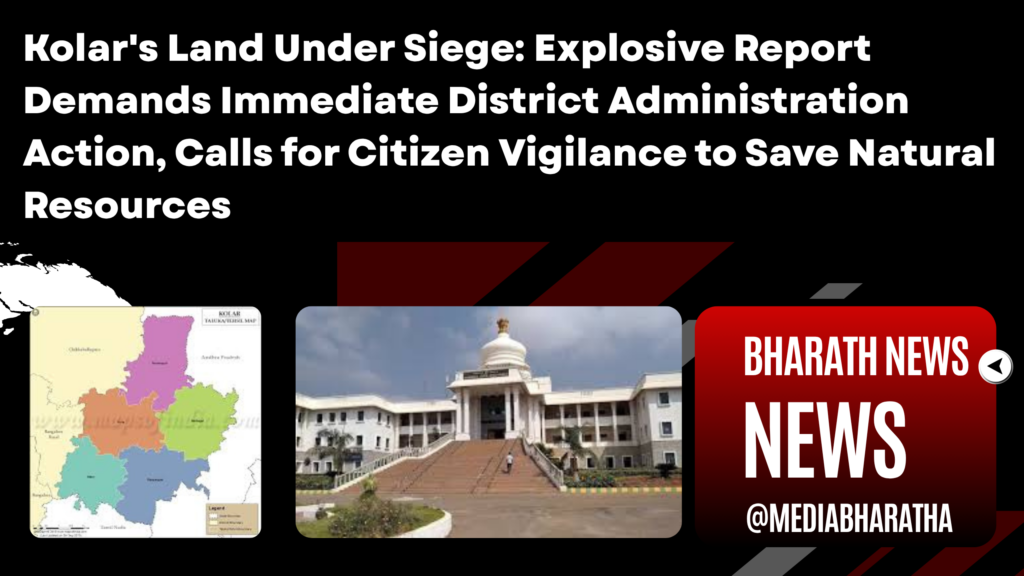
An explosive report has unveiled a widespread land scam gripping Kolar district. It reveals how valuable gomala, lake, and agricultural lands are being illegally encroached upon through a nexus of corrupt officials and the real estate mafia. The report not only demands immediate action from the district administration but also highlights every citizen’s responsibility in protecting natural resources, underscoring the urgent need for measures to ensure justice for future generations.
The document paints a grim picture of alleged collusion between corrupt government officials, particularly within the Deputy Commissioner’s office and the Revenue Department, and a powerful nexus of real estate developers and land mafias. This unholy alliance, the report asserts, is facilitating illegal land conversions and encroachments on various types of lands.
The Modus Operandi of Corruption:
The report meticulously outlines the mechanisms employed in this land scam:
- Fraudulent Land Conversions (Forms 9 & 11): The process of converting agricultural land to non-agricultural (NA) land is being systematically abused through the misuse of “Forms 9 and 11.” This has led to widespread illegal conversions of fertile farmlands for non-agricultural purposes.
- Illegal Issuance of Title Deeds: Constitutional norms safeguarding protected lands such as ‘gomala’ (grazing lands) and ‘gundu topu’ (reserved groves) are being brazenly disregarded, with title deeds issued to undeserving parties.
- Exploitation of Legal Loopholes: The corrupt network actively exploits ambiguities or weaknesses within existing land laws, indicating a systemic flaw that needs urgent rectification.
“The recurring reference to ‘Forms 9 and 11’ signifies a specific procedural vulnerability exploited for illegal land conversion,” notes the report, suggesting that it’s not merely individual bribes but a potentially flawed system that allows such manipulation.
Systematic Encroachment and Misuse of Public & Agricultural Lands:
The scale of land misuse in Kolar is alarming, impacting diverse land categories:
- Illegal Alienation of Gomala and Gundu Topu Lands: Despite constitutional and legal protections, these vital common lands are being illegally alienated, depriving the public of crucial resources.
- Commercialization of Highway-Adjacent Government Lands: Government lands flanking national highways, particularly visible along the Kolar-Nangali stretch, are being illegally encroached upon and converted for commercial purposes, leading to a significant loss of public revenue.
- Destruction and Encroachment of Lakes: Lakes, critical for Kolar’s water security and ecological balance, are being destroyed and encroached upon, raising serious environmental concerns and exacerbating water scarcity.
- Conversion of Fertile Agricultural Land: Productive agricultural lands are being systematically converted for non-agricultural purposes for real estate projects, with allegations of corruption even reaching the Deputy Commissioner’s office. This trend is “killing living land” and poses a severe threat to food security and farmer livelihoods.
The report highlights that these encroachments are not random but a calculated strategy, targeting lands that offer maximum economic benefit, including common lands (easy to usurp), lake beds (prime real estate value), and highway lands (immediate commercialization opportunities). This points to the highly organized nature of the land mafia.
Legal and Constitutional Violations: A Breach of Public Trust:
The pervasive land corruption in Kolar represents a clear violation of numerous constitutional provisions and land laws, including the Karnataka Land Revenue Act, Land Reforms Act, and Environmental Protection Act. The report explicitly states that the “illegal issuance of title deeds, disregarding constitutional rules,” directly undermines the rule of law.
The core legal concept of the “Public Trust Doctrine,” which posits that the government holds public resources like land and water in trust for the benefit of the general populace and future generations, has been severely violated. This widespread corruption, by bypassing legal processes and transparency, leads to arbitrary and illegal land transfers, representing a fundamental breach of public trust.
Socio-Economic and Environmental Consequences:
The impact of Kolar’s land corruption is profound and far-reaching:
- Impact on Farmers and Agricultural Livelihoods: The conversion of fertile land is forcing farmers to abandon agriculture, leading to loss of livelihoods, displacement, and rural poverty. This also has broader implications for food security in the region.
- Environmental Degradation: The destruction of lakes leads to water scarcity, loss of biodiversity, soil degradation, and overall ecological imbalance. “Modernization systems spoiling the environment” have further exacerbated these issues.
- Loss of Public Assets and Rights of Future Generations: The value of illegally encroached public lands is immense. The current corruption deprives future generations of essential resources and a healthy environment, representing an intergenerational injustice. The stark warning, “You yourselves will become the shadow of death for the future of your next young generation,” underscores the long-term consequences of this crisis.
Failure of Oversight and Enforcement: Revenue Department’s Inaction:
The report severely scrutinizes the role of the Revenue Department, questioning “why Revenue Department officials are not rectifying this even once.” The lack of punitive action against corrupt officials or those facilitating illegal transactions is starkly evident, pointing to potential complicity, lack of political will, or insufficient resources. The Revenue Department, being the primary custodian of land records and public land, is failing in its fundamental duty.
Role of Black Money and Uncontrolled Real Estate Activities:
The land corruption network in Kolar is heavily fueled by black money and uncontrolled real estate activities:
- Fueling the Land Mafia: Illegal money is laundered through illicit land transactions, providing financial power to the operations of the land mafia.
- Uncontrolled Real Estate Growth: The rapid and largely unregulated expansion of the real estate sector in Kolar is directly linked to the demand for illegally converted land, creating a self-perpetuating cycle.
Recommendations for Immediate Action and Long-Term Reforms:
Given the complex and systemic nature of land corruption in Kolar, the report advocates for a multi-pronged strategy encompassing both immediate actions and long-term reforms:
- Call for an Independent, Time-Bound, In-Depth Investigation: A high-level, impartial investigation by an agency outside the district administration is crucial to uncover the full extent of the nexus.
- Measures for Reclamation and Restoration of Public Lands: Concrete steps must be proposed to identify, reclaim, and restore illegally encroached government lands, including canceling fraudulent title deeds.
- Strengthening Legal Frameworks and Enforcement Mechanisms: Existing land laws need urgent review and amendment to close loopholes, with strict penalties for land grabbers and corrupt officials, and expedited judicial processes for land-related cases.
- Enhancing Transparency and Accountability in Land Administration: The report recommends comprehensive digitization of land records with public access and regular audits, along with robust grievance redressal mechanisms and mandatory asset declarations for revenue officials.
- Promoting Whistleblower Protection and Citizen Participation: Emphasizing the protection of individuals who report corruption, the report encourages active citizen participation and vigilance in monitoring land use and reporting illegalities.
The report argues that “digitization of land administration” is not just a technical upgrade but a crucial anti-corruption measure, significantly reducing opportunities for manipulation and bribery.
Conclusion: A Call to Safeguard Kolar’s Future:
The unchecked land corruption in Kolar district is inflicting severe and long-lasting consequences on its environment, economy, and social fabric. The destruction of agricultural lands, encroachment of lakes, and misuse of public resources pose a grave threat to the district’s sustainability. This situation is not merely an economic loss but an attack on the rights of future generations.
The report stresses the need for a concerted effort from the government, judiciary, civil society, and vigilant citizens to safeguard public assets and ensure justice. Restoring transparency, accountability, and the rule of law in land administration is paramount. Immediate, comprehensive investigations, land reclamation measures, and systemic reforms are critical to resolving this crisis.
Kolar possesses the potential to reclaim its resources and ensure a sustainable and equitable future for its next generation. However, the consequences of inaction are dire. The warning, “you yourselves will become the shadow of death for the future generation,” reinforces the moral imperative to act. At this critical juncture, everyone must recognize their responsibility and act to safeguard Kolar’s future.
About The Author